The Conjuring 2: The True Haunting Behind the Enfield Poltergeist

Hello my stars, today's topic is about one of the famous horror movie's story "The Conjuring 2". This story is not fictional, it's real and I'm gonna explain this story. Personally, I love the conjuring series and as a horror story lover I'm impressed by this series. So, let's start this story's explaination. 

When reality became more terrifying than fiction.


A House That Wouldn’t Stay Quiet

Long before Hollywood turned it into a blockbuster, the haunting at 284 Green Street, Enfield, London was already one of the most chilling real-life mysteries of the 20th century. Between 1977 and 1979, the modest council house became the stage for what many still call Britain’s most documented haunting.

For Peggy Hodgson, a single mother of four, life was already difficult. But when her children began hearing banging on walls, seeing furniture moving on its own, and witnessing objects fly through the air, the ordinary turned into the unimaginable.


The Girl at the Center of the Storm

The haunting seemed to revolve around 11-year-old Janet Hodgson, a shy schoolgirl who would soon become the face of terror. Witnesses—including police officers, neighbors, and journalists—reported seeing her levitate, speak in a man’s voice, and even be thrown across rooms by unseen hands.

The chilling voice that came from Janet claimed to belong to “Bill Wilkins”, an elderly man who, according to the voice, had died in the very house years earlier. Later research confirmed that a man named Bill Wilkins had indeed passed away in that house from a brain hemorrhage—just as the voice described.

When questioned, Janet appeared to slip into trances, her voice dropping to a guttural growl no child could naturally produce. Experts said her vocal cords couldn’t have survived such strain if it were fake.


Photographs That Shocked the World

The media soon descended on the Hodgson home. The Daily Mirror and BBC captured startling photographs—most famously, one showing Janet seemingly floating in mid-air, her limbs stiff as if yanked upward by invisible strings.

Skeptics argued she was simply jumping from her bed, caught mid-motion by a flash camera. But those who were there insisted: it didn’t look like jumping—it looked like flying.


Investigators and the Warrens’ Visit

The Society for Psychical Research (SPR) took the case seriously, sending investigators Maurice Grosse and Guy Lyon Playfair, who would later write a detailed book, This House is Haunted. They recorded over 2,000 separate incidents—from cold spots and knocking to furniture sliding and toys launching like missiles.

Meanwhile, Ed and Lorraine Warren, the famous American demonologists portrayed in The Conjuring 2, visited Enfield briefly. In reality, their involvement was much smaller than in the film, but Lorraine later said she felt “a dark entity feeding off the children’s fear.”


Truth or Trickery?

Not everyone was convinced. Some journalists accused the girls of faking certain moments—especially after they were caught bending spoons and throwing small objects. But even skeptics admitted that not all incidents could be explained.

Janet herself confessed years later:

“Yes, we faked a few things—just to see if anyone would notice. But only two percent of it. The rest was absolutely real.”

Even decades later, she maintains that she was genuinely haunted by something “evil and angry.”


The Aftermath: Silence, but Never Peace

By 1979, the disturbances had quieted, and the family tried to move on. But those who visited the Enfield house say the atmosphere still feels wrong. A lingering heaviness remains, as if the walls remember.

The case became a cornerstone of paranormal research—and the inspiration for James Wan’s 2016 film The Conjuring 2.
The movie added the terrifying demon nun Valak, which never existed in the original haunting, but it captured the same overwhelming sense of dread that once filled that North London home.


The Legacy of Enfield

Whether a masterpiece of mass hysteria or genuine proof of the supernatural, the Enfield Poltergeist continues to haunt the world’s imagination.

It reminds us of something deeply unsettling: that our homes—our safest spaces—can sometimes turn against us, and the line between the living and the dead is thinner than we dare believe.

“The Conjuring 2” may be a movie, but its roots grow deep into one of the strangest, most terrifying cases ever recorded—proof that sometimes, the scariest stories don’t come from Hollywood—they come from history.


The Tamám Shud Case: Australia’s Most Terrifying Unsolved Death


Hello my stars, today we are gonna talk about a very interesting, haunting and mysterious case which belongs from Australia. This case is unexplainable yet spine chilling. In 1948, a man was found dead on Somerton Beach — no name, no cause, only a note reading “Tamám Shud”“It is finished.” A code, a lover, a secret… and a mystery that still haunts the world. Now let's start the explaination.


The Tamám Shud Case

“Every clue led to nowhere. Every answer whispered another question.”


Introduction: The Man Who Came from Nowhere

On a cold morning of December 1, 1948, the quiet Australian seaside town of Adelaide woke up to a sight straight out of a detective novel — or perhaps, a nightmare.
A man lay dead on Somerton Beach, propped neatly against a seawall, his legs crossed and his head resting peacefully — as though he had merely fallen asleep.

But this was no ordinary death.
He carried no wallet, no identification, and every clothing label had been carefully removed. Even the brand tags from his shoes and tie had been cut off with precision. His pockets were clean — except for a few mundane items: a bus ticket, a train stub, a pack of gum, and a half-empty pack of cigarettes.

The man had no name, no origin, and apparently… no past.


The Mystery Deepens: The Body That Shouldn’t Exist

When the autopsy was performed, doctors were left speechless. The man was in perfect health — his organs unscarred, his body well-kept — but his heart had simply stopped beating.
No trace of poison, trauma, or illness was found. Yet, the symptoms — internal congestion, dilated pupils, and a strange lividity — suggested poisoning by something undetectable.

The pathologist finally admitted:

“I am quite convinced the death was not natural. It could not have been accidental. But I cannot say what killed him.”


The Only Clue: A Phrase Torn from a Book

Weeks later, as investigators examined the man’s clothing once more, a tiny scrap of paper was found hidden in a secret pocket of his trousers.
On it were just two Persian words, neatly typed:

“Tamám Shud.”

In Persian (from The Rubaiyat of Omar Khayyam), it means “It is finished” — or “The end.”

This discovery transformed the case from an ordinary mystery into something darkly poetic — and deeply unsettling.


The Book That Shouldn’t Have Existed

Police scoured Adelaide for any connection, and then a breakthrough came — or so they thought.
A man came forward with a copy of The Rubaiyat of Omar Khayyam, which had mysteriously appeared in the back seat of his unlocked car, parked near Somerton Beach around the time of the death.

And at the end of that book, the final page had been ripped out.
The missing words? You guessed it — Tamám Shud.

Inside the book, detectives found a code — a series of random letters scrawled in faint pencil:

WRGOABABD
MLIAOI
WTBIMPANETP
MLIABOAIAQC
ITTMTSAMSTGAB

To this day, cryptographers, intelligence experts, and military codebreakers have failed to decipher it completely.
Some believe it was a spy code. Others think it was a personal message — perhaps a confession.

But no one truly knows.


The Woman and the Baby

Then came another eerie twist.
The book was traced to a nurse living nearby, known publicly only as Jestyn. When shown the dead man’s face, she turned pale, nearly fainted, and refused to speak further — saying only, “I don’t wish to talk about this man.”

Soon after, she gave birth to a son who bore an uncanny resemblance to the Somerton Man — right down to the rare dental features and ear shape.
DNA tests decades later hinted at a genetic connection, but not enough to close the case.

Had the Somerton Man been her lover? A spy sent to contact her? Or something else entirely?


Theories: Spy, Lover, or Ghost?

Over the years, countless theories have surfaced — each more chilling than the last.

  1. The Cold War Spy Theory:
    Adelaide was near a key military base, and the post-war years were thick with espionage. The poison, the coded message, and the false identity point to a covert operative whose cover was blown.

  2. The Doomed Romantic:
    Some believe the man took his own life after being rejected by “Jestyn,” leaving behind the cryptic Persian phrase — Tamám Shud — as his final goodbye.

  3. The Time Traveler Hypothesis:
    A fringe but fascinating theory — that he carried no identity because he had none to begin with. His fingerprints, body features, and DNA didn’t match anyone in any record.


Modern Investigations: The DNA Revelation

In 2022, forensic experts finally extracted mitochondrial DNA from the preserved hair of the Somerton Man. The result suggested he was Carl “Charles” Webb, an electrical engineer from Melbourne who went missing around the same time.

But even that didn’t explain why he died, how he ended up at Somerton Beach, or why he carried a coded message from a Persian poem about fate, death, and the end of all things.


Tamám Shud — It Is Finished… or Is It?

The Tamám Shud Case remains one of the most haunting real mysteries in history — a perfect blend of logic and the unexplainable.
It’s a story that feels more like a ghostly warning than a crime report — a message whispered across decades:

“Every secret ends with silence. Every ending writes itself.”

Perhaps the man on Somerton Beach knew something the world was never meant to uncover.
And maybe, when he whispered his final words — Tamám Shud
he wasn’t just ending his life.
He was closing a chapter none of us were supposed to read.

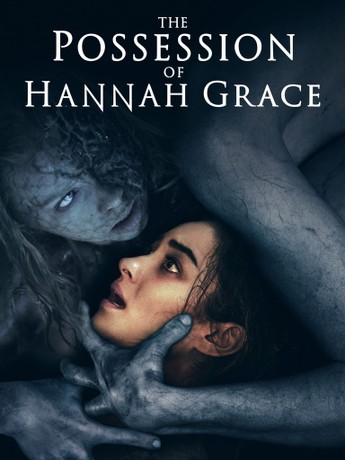
The Possession of Hannah Grace — A Deep Dive into Darkness and the Death That Refuses to Die


Hello my stars, today I'm gonna explain about the movie "The Poss
ession of Hannah Grace". I personally watched this movie and for me it's worth the time, so I suggest you all to watch the movie in your free time. Now let's start.

Genre: Supernatural Horror
Director: Diederik Van Rooijen
Starring: Shay Mitchell, Kirby Johnson, Stana Katic
Release Year: 2018

Introduction: A Modern Twist on the Exorcism Trope

The Possession of Hannah Grace isn’t your typical exorcism movie. Instead of showing priests battling demons with holy water and prayers, it places the story in a sterile morgue, where silence hums louder than screams.

Set in the aftermath of an exorcism gone wrong, the film presents a grim premise — what if evil could survive death itself? This question fuels a tense, claustrophobic narrative that redefines what it means to be “possessed.”


Plot Summary (Without the Glamour)

Hannah Grace, a young woman undergoing an exorcism, dies during the ritual — her father’s attempt to save her ends tragically. Months later, a former cop named Megan Reed (played by Shay Mitchell) takes a night shift job in a city morgue.

When a new corpse arrives — that of Hannah Grace — strange and inexplicable things begin to happen. The lights flicker, bodies move, and the supposed dead girl shows signs of life. The haunting doesn’t come from a ghost; it comes from the body itself.

What follows is a night of psychological torment and supernatural violence, where the morgue becomes a tomb of both the living and the dead.


The Psychological Core: Trauma Meets the Supernatural

Unlike traditional horror heroines, Megan is not just scared — she’s broken.
A recovering addict and ex-cop haunted by guilt and PTSD, she’s battling her own demons before Hannah Grace’s corpse even arrives.

This duality — internal vs. external possession — becomes the movie’s most fascinating layer. Is Hannah Grace’s reanimation truly demonic, or is it a physical manifestation of Megan’s trauma and fear?

In essence, the film equates addiction and grief with spiritual invasion. Evil doesn’t always enter through doors or rituals; sometimes it creeps in through despair and self-doubt.


The Morgue as a Metaphor

The entire movie takes place within the cold, sterile environment of a hospital basement — a modern underworld.

Every sound — the hum of fluorescent lights, the whir of security doors — becomes a pulse of dread. This setting is symbolic:

  • The morgue is a space between life and death, mirroring Megan’s own limbo between her past and her recovery.

  • It’s also a theater of rebirth, where Hannah Grace’s corpse reawakens, defying both science and spirituality.

This environment gives the film a unique identity — less gothic, more clinical horror — like an autopsy of evil itself.


Evil Beyond Death — Thematic Exploration

The core question the movie raises: Can evil die with the body?

Unlike The Exorcist or The Conjuring, this film proposes a darker theory — that demonic energy can bind itself to physical matter, even after death. Hannah’s corpse doesn’t rot, doesn’t decay, and feeds on life to sustain its demonic existence.

This aligns with the concept of residual possession, a lesser-known idea in demonology, where spiritual corruption remains in objects or bodies.

It blurs the line between religion and biology, suggesting that evil can evolve — even scientifically.


Cinematic Craft: Atmosphere Over Gore

Visually, the movie is minimalistic but impactful.

  • The lighting is cold, clinical, almost metallic — evoking death without showing too much.

  • The camera often lingers on empty corridors and flickering lights, building anticipation rather than jump scares.

  • The corpse of Hannah Grace, played by contortionist Kirby Johnson, is disturbingly realistic — her body movements defy human anatomy, adding to the unease.

Sound design plays a major role: faint whispers, metallic echoes, and the rhythmic thump of the morgue doors intensify the claustrophobia.


Symbolism of Hannah Grace

Hannah isn’t portrayed as an evil entity seeking revenge — she’s a vessel, a tragic victim trapped between two worlds.
Her body becomes a representation of what happens when purity and faith are corrupted by forces beyond comprehension.

Interestingly, her “grace” contrasts her state — the word itself symbolizes divine favor, yet here it’s corrupted, showing how sacredness can be twisted.


The Ending: Death as Release or Rebirth?

In the final act, Megan confronts Hannah’s reanimated body, realizing she must burn it to truly end the curse.
But the deeper meaning lies in Megan’s redemption — by destroying Hannah, she symbolically destroys her own guilt and addiction.

The fire purges not just the demon, but the emotional rot that’s consumed her.

Yet, the film’s final moments leave a chilling ambiguity:
Is the evil truly gone, or just dormant — waiting for another body, another soul, another shift?


Final Thoughts: A Cold, Realistic Nightmare

The Possession of Hannah Grace is not about the spectacle of exorcism — it’s about what happens after.
It bridges faith, trauma, and mortality, making the viewer question whether horror lies in demons... or in the emptiness that follows loss.

It’s a modern horror that trades shock for psychological decay, proving that sometimes, the most terrifying thing isn’t what moves in the dark — it’s what refuses to stay dead.

She Only Wants Her Toy… Or Does She


Some stories cling to towns like an old shadow — whispered from one generation to another, too unsettling to ignore, too eerie to dismiss. In Chandan Nagar, a small town by the Hooghly River, there is one such story.

People say it belongs to a little girl in a red frock.
People also say she’s still waiting.


The First Sightings

It begins innocently enough. A lone traveler walks past the abandoned house on the narrow lane. The windows are shattered, vines curl through the cracks, and the gate rusts in silence. The night is heavy, and the air tastes colder there.

Then comes the sound.
A small shuffle.
A child’s footsteps.

She appears — a girl, no older than seven. A faded red frock clings to her small frame, far too neat for the dusty road. Sometimes she clutches a doll, sometimes just a bundle wrapped in cloth. Her face looks harmless, almost sweet, yet pale as if drained of life.

She tilts her head, looks straight into your eyes, and says softly:

“Dada, amar putul ta diye deben.”
(Brother, can you give me my toy?)


The Price of Answering

The brave — or the foolish — sometimes respond.

A shopkeeper once admitted he spoke to her. He returned home trembling, pale, unable to describe what happened after she smiled. Within weeks, he stopped speaking altogether and soon died without reason.

A boy, not much older than her ghostly figure, once bragged to friends that he had seen her, spoken to her, even promised her help. He fell sick that very night. His final words to his mother were chilling:
“She’s standing by my bed, still waiting.”


The Lane Nobody Crosses

By day, Chandan Nagar glows with life — children play cricket, shops spill into the streets, the river shimmers like glass. But after sundown, the atmosphere changes. Auto drivers avoid the haunted lane. Locals keep their windows shut. Even policemen have reported hearing giggles in the dark, the sound of tiny feet following them, the faint smell of damp earth where the road is dry.

The house itself still stands — locked, broken, devoured by vines. Nobody dares to enter. Nobody dares to tear it down.

It’s as though the house, like the girl, is waiting.


A Shadow Without an Ending

No one truly knows who she was. Some whisper she drowned in the river. Others believe she was killed in that very house. The story shifts with each retelling, but one detail never changes:

The girl in the red frock is still searching.

So if you ever walk through Chandan Nagar at night, and a small, trembling voice calls to you — asking for her toy — don’t answer. Don’t even look back.

Because the ones who do… never stay the same.


Final Thought

She doesn’t chase.
She doesn’t scream.
She only asks — softly, innocently, like any lost child would.

And that’s what makes her terrifying.
Because one night, when the lane is quiet enough and the shadows long enough… she might just ask you.

“You may forget this tale, but it won’t forget you.”


Don’t Look Back: The Spirits Walk on Bhoot Chaturdashi


"চৌদ্দটি প্রদীপ জ্বালাও… আজ ভূত চতুর্দশী।"
(Light fourteen lamps… tonight is Bhoot Chaturdashi.)

When the moon grows pale and the chill in the air creeps in just before Kali Puja, Bengal prepares for a festival unlike any other — Bhoot Chaturdashi, the eerie night when ghosts walk among the living.


What is Bhoot Chaturdashi?

Rooted deep in Bengali folklore, Bhoot Chaturdashi is observed on the 14th night of Krishna Paksha (waning moon) in the Bengali month of Kartik, just before Kali Puja (Diwali in Bengal). It is believed that on this night, the souls of 14 forefathers return to visit their families.

But they don’t come alone. Alongside them, it is said, restless spirits, wandering petnis, and hungry shakchunnis also roam the earth — seeking food, warmth, or sometimes... revenge.


The Ritual of 14 Diyas – Light Against Darkness

Bengali households light 14 earthen diyas (oil lamps) at the entrances, windows, and rooftops. Each diya is for one of the 14 ancestors, guiding their souls home and protecting the family from evil spirits lurking in the shadows.

In rural Bengal, the flicker of diyas under a cloudy sky feels like a barrier between two worlds — the living and the dead.


The Forbidden Meal: No Meat, No Fish

In a land that reveres its ilish and kosha mangsho, Bhoot Chaturdashi is one rare night when meat and fish are forbidden. A pure vegetarian meal is cooked as a symbolic offering for the souls.

Superstition says — if you cook fish that night, the Mechho Bhoot (fish-loving ghost) might just pay you a visit, licking your pots clean… or worse, licking your dreams into nightmares.


Legends That Come Alive on Bhoot Chaturdashi

On this night, every Bengali child grows up hearing these spine-chilling tales:

  • The Nishi Dak who calls your name softly in a loved one’s voice — don’t answer.

  • The Pichal Peri, standing by the pond in red, her backward feet hidden under her saree.

  • The Shakchunni, who enters a woman’s body to relive her unfinished married life — until an ojha chants mantras to drive her out.

As elders whisper these tales, and the wind howls through the palms, the night stretches long and uneasy.


Darkness Meets Devotion: The Spiritual Side

While Bhoot Chaturdashi is filled with eerie lore, it's also a deeply spiritual night. The lighting of lamps and the silence in the air is a form of remembrance — a gentle way to tell our ancestors, “We still remember you.”

But one must be careful. This night is not just about ancestors. It is also when malevolent spirits try to sneak into homes unnoticed. That’s why doors are kept closed, children are told to sleep early, and black sesame seeds are scattered to ward off evil.


The Midnight Hauntings

In many parts of rural Bengal, people say dogs whimper, cats vanish, and shadows move differently on this night. Even today, some believe if you roam alone on Bhoot Chaturdashi, you might meet someone… who doesn’t belong in this world anymore.


Final Thoughts: Bengal’s Haunted Heartbeat

Bhoot Chaturdashi is more than just a cultural celebration — it's a haunting heartbeat in the soul of Bengal. It reminds us of our roots, our rituals, and our restless spirits.

So, this year, when the night of 14 shadows descends, and the diyas flicker in the wind, remember — you are never truly alone.

  • Do you dare to celebrate Bhoot Chaturdashi this year?

Light your 14 lamps. Lock your doors. And whatever you do… don’t answer when someone calls your name from behind.

10 CURSED FILMS THAT KILLED, HAUNTED, AND NEVER LET GO


Lights flickered. Blood spilled. Some films should never have been made.
Dare to watch them? Then beware: the horror didn’t end when the camera stopped rolling… it only began.


1. The Exorcist (1973) – The Film That Awakened Something

They called it the most terrifying movie ever made. But few knew it unleashed real evil.

  • Nine deaths were linked to the production.

  • A fire destroyed the entire set—except Regan's room.

  • Actors and crew experienced mysterious illnesses, accidents, and deaths.

  • Linda Blair (Regan) suffered real back injuries from violent stunts.
    The church refused to bless the film. Maybe they were right.


2. Poltergeist (1982) – “They’re Here”… and So Is the Curse

This wasn’t just a ghost story—it was a death sentence.

  • Heather O’Rourke, the angelic child star, died at 12 from a rare illness.

  • Dominique Dunne was strangled by her ex weeks after the film released.

  • Actors from the sequels also met early and violent deaths.

  • Real skeletons were used in scenes—without the actors' knowledge.
    Some say they invoked restless spirits… who never left.


3. The Omen (1976) – The Devil’s Work Behind the Camera

A film about the Antichrist shouldn’t be made without consequence.

  • Lightning struck planes carrying the director and star on separate occasions.

  • A hotel used by the crew was bombed by the IRA.

  • A special effects artist later recreated a decapitation scene… only to lose his girlfriend in a real-life car accident, decapitated in the same way.
    It wasn’t a film. It was a warning.


4. The Crow (1994) – Death in a Single Take

Brandon Lee was rising—until a prop gun fired a real bullet.

  • The scene wasn’t supposed to kill him, but it did—on camera.

  • Previous crew injuries, mysterious set damage, and eerie omens plagued production.

  • The comic it was based on was inspired by the author’s fiancée’s death.
    The role of vengeance claimed him.


5. Rosemary’s Baby (1968) – The Devil’s Baby Was Just the Beginning

The film’s success was met with doom and blood.

  • Producer William Castle suffered hallucinations and illness after receiving death threats.

  • Composer Krzysztof Komeda died eerily like his character in the film.

  • Roman Polanski’s wife, Sharon Tate, was murdered in a ritualistic slaying by the Manson Family.
    They say evil watched from the shadows… then stepped into the light.


6. The Blair Witch Project (1999) – Not a Film, but a Ritual

Though fictional, the marketing was so realistic, people believed the cast had died.

  • Actors were psychologically tortured by the crew for realism.

  • Strange sightings were reported in the Maryland woods after filming.

  • Some believe the chaos it stirred invited something real into the world.
    The camera shook… and so did the barrier between worlds.


7. The Possession (2012) – The Dybbuk Box That Shouldn’t Be Touched

  • Based on a real haunted Jewish artifact, the “Dybbuk Box.”

  • The box vanished mysteriously during production.

  • Fires broke out on set, and multiple crew felt “watched.”

  • Director refused to film at night—said “something” moved in the shadows.
    What was inside... didn’t want to be seen.


8. Twilight Zone: The Movie (1983) – Death on Film

Three people—including two children—decapitated by a crashing helicopter during filming.

  • Actor Vic Morrow had spoken of his fear of dying on set… days before it happened.

  • The tragedy was caught on camera.
    A cursed vision that ended in real screams.


9. Annabelle (2014) – The Doll Doesn’t Like to Be Copied

A film about a real demonic doll—and she noticed.

  • Lights flickered violently during filming.

  • A crew member was killed on set the day after challenging Annabelle’s story.

  • Cast members refused to be alone on set.
    You can film her. Just don’t forget she’s watching back.


10. Atuk (Unreleased) – The Script That Kills

This comedy script remains unfilmed—for good reason.

  • Every actor attached to it—John Belushi, Chris Farley, Sam Kinison, John Candy—died unexpectedly.

  • The curse doesn’t wait for production—it stalks potential.
    Even reading the script is considered dangerous.


Final Whisper…

Some films don’t just entertain—they invite. When stories of demons, curses, and ghosts are told through cameras… perhaps we do more than dramatize evil.
Perhaps we open doors.
And some doors—should never be opened.


Okiku: The Doll That Breathed Death


A Real Japanese Haunting That Still Grows Hair Today

In a dark wooden temple in Hokkaido, behind glass and silence, a doll sits patiently. Its black hair spills down like ink, longer than it should be. They say her soul never left. They say she’s watching you.


A Toy, A Curse, A Whisper of Death

In the winter of 1918, the snow fell heavy over Sapporo. A young boy, Eikichi Suzuki, wandered into a quaint shop, drawn to a glassy-eyed doll dressed in crimson and gold kimono. Its skin was pale porcelain, its lips slightly parted—as if about to speak. He bought it for his beloved little sister, Okiku, unaware he had brought home a companion... and a vessel.

The toddler adored the doll. She named it after herself and held it close night and day. But only weeks later, Okiku fell sick—her tiny body ravaged by fever. She died suddenly, without warning, cradling the doll in her arms.


The Doll Would Not Let Go

The grief was unbearable. Her parents built a shrine in her memory, placing her beloved doll upon it. But soon, they noticed something unnatural. The doll’s hair, once cut in a clean, childlike bob, began to grow—slowly, eerily—past her shoulders, past her waist.

Whispers echoed in the night. Doors opened by themselves. And the doll? Sometimes it shifted in the corner of their eyes. Always facing them. Always waiting.

The family began to dream of Okiku. But she wasn't smiling. She was cold. Hollow-eyed. Asking, "Why did you leave me?"


The Temple of Secrets

Too frightened to destroy it, the Suzuki family offered the doll to the Mannennji Temple in Iwamizawa, where monks agreed to watch over it. The doll was sealed in a glass case—but the hair kept growing. Every year, the monks trimmed it. Every year, it grew back—fine, black strands curling downward like wet silk.

When scientists examined the hair, their verdict turned blood cold:

"This is the hair of a living child."


Eyes That Follow, Mouth That Moves

Visitors describe a suffocating presence when near Okiku. Some say her mouth shifts—just slightly—parting as if about to whisper. Others swear her eyes follow them, slowly, deliberately, across the room.

Photography is discouraged. Those who disrespect her—laugh, mock, or touch the glass—report fevers, accidents, and death in the family within weeks. One man reportedly died in a car crash two days after snapping a selfie beside her. His phone, retrieved from the wreckage, had been wiped clean—except one image:

The doll’s face. Close-up. Smiling.


A Soul That Won’t Let Go

Okiku isn’t just a ghost story. She is still there, in her glass prison, hair still growing, and her presence still potent. The monks say she’s peaceful—until she’s not. When asked why they keep her, one old priest simply replied:

“She wants to stay. And we dare not refuse her.”


Whatever You Do...

If you visit Mannennji Temple, remember these rules:

  • Do not speak her name aloud.

  • Do not stare too long into her eyes.

  • And above all… do not forget her.

Because she never forgets you.


The Final Whisper

They say Okiku's spirit is at peace.

But if you read her story—truly read it—and think of her when the room is dark and silent…
You may hear soft footsteps outside your door.
Or wake to the feeling of tiny fingers brushing your hair.

It’s not the wind.
It’s not a dream.
It’s her.

Because now she knows your name.

Borley Rectory – The Most Haunted House in England


Where the Veil is Thinnest

Tucked away in the sleepy countryside of Essex, England, once stood a house that earned a reputation so dark, it sent shudders across Europe. It was not just haunted — it was infested with spirits, secrets, and an unexplainable darkness that seemed to live and breathe in the very walls.

This was Borley Rectory — a place that devoured reason, haunted its residents, and gave rise to decades of supernatural terror.


A History Bathed in Mystery

Built in 1862 on the site of an old monastery, Borley Rectory was intended to be a peaceful residence for Reverend Henry Bull and his family. But from the very beginning, something felt… off.

Visitors and residents alike reported phantom footsteps, ghostly whispers, and the figure of a nun gliding silently through the garden, her face twisted in sorrow.

Legend has it that centuries earlier, a monk and a nun from the monastery fell in love. When their affair was discovered, the monk was hanged, and the nun was bricked alive inside the convent walls.

Her spirit, they say, never left.


Ghosts That Refused to Stay Dead

As the years passed, reports escalated:

  • A headless coachman was seen thundering through the grounds by moonlight.

  • A nun in black, weeping in the shadows, often spotted near the ruins.

  • Windows would shatter on their own, bells rang in empty rooms, and messages appeared on the walls begging,

    "Marianne, please help me."

Even Reverend Lionel Foyster’s wife, Marianne, claimed the spirits scratched her, threw objects, and even levitated her out of bed.


Harry Price and the Paranormal Storm

In 1929, famed ghost hunter Harry Price arrived at Borley Rectory, drawn by its horrifying reputation. What he found was a storm of paranormal phenomena:

  • Cold spots that seemed to move like predators

  • Unexplained poltergeist activity

  • Spirits responding to questions with knocks — intelligent, deliberate answers

  • Séances where names, dates, and warnings emerged from the other side

Price believed Borley Rectory was a “psychic center”, a hotspot where the barrier between the living and dead was dangerously thin.


The Final Fire

In 1939, Borley Rectory was consumed by fire under mysterious circumstances. The fire, strangely concentrated and selective, left behind no explanation.

Some say the spirits burned the house to free themselves. Others whisper the house destroyed itself to prevent the truth from ever fully surfacing.

But the grounds remain — and visitors still report:

  • Distant whispers in the dead of night

  • Apparitions moving through the overgrown gardens

  • A sense of being watched by something unseen, yet deeply aware


Final Thoughts: A House That Refused to Die

Even now, decades after it burned, Borley Rectory is whispered about in paranormal circles as a place where darkness took root and bloomed. It was more than a haunting — it was a collision point of unresolved suffering, a theater of the trapped and tormented.

Some believe the house became a magnet for the restless dead. Others say it was cursed from the very beginning, and no prayer or priest could ever cleanse it.

But one thing remains certain:

Whatever lived within Borley Rectory didn’t just haunt a house… it haunted history itself.


The Sallie House – A Portal to the Paranormal or a Demon’s Den?


Location: Atchison, Kansas – A Quiet Town With a Terrifying Secret

Nestled in the sleepy streets of Atchison, Kansas, stands an unassuming brick house that holds one of America’s most chilling real-life haunting cases. At first glance, The Sallie House looks harmless — a small, worn home with a white picket fence and faded charm. But within its walls, something waits. Something sinister. Something that has left visitors scratched, terrified, and running for their lives.

This is no mere ghost story. This is the true account of a house that might be cursed — or worse — possessed by something dark and intelligent.


Who Is Sallie?

The legend begins in the mid-1800s, when a young girl named Sallie was brought to the town doctor — who lived in the house — suffering from severe abdominal pain. Suspecting appendicitis, the doctor began surgery… before the anesthesia had taken effect. Sallie allegedly died screaming in agony, and her spirit never left.

But that’s only the origin story. What happened in the modern era is far more terrifying.


The Haunting of Tony & Debra Pickman – 1993

In 1993, newlyweds Tony and Debra Pickman moved into the house, expecting a peaceful life. Instead, they walked into a waking nightmare.

  1. The Signs Began Subtle:

  • Lights flickering without explanation

  • Cold spots drifting through rooms

  • Their dog growling at unseen things

     But things escalated fast.

     2. Then Came the Attacks:

  • Tony began waking up with deep, red claw marks on his chest and back.

  • He reported seeing shadowy figures, including a little girl in old-fashioned clothes who would appear and vanish.

  • Objects flew across the room, electronics malfunctioned, and fires would ignite spontaneously.

  • Tony became increasingly aggressive and depressed, as if the house itself was poisoning his soul.

     The spirit they believed was Sallie seemed to love Debra — and hate Tony.


Documented Paranormal Evidence

The haunting was so intense that it caught the attention of paranormal investigators, psychics, and TV crews. What they found was deeply disturbing:

  • EMF readings off the charts

  • Photos capturing orbs, mists, and strange child-like figures

  • EVP (Electronic Voice Phenomena) recordings with whispers, growls, and even a child’s voice crying for help

One investigator collapsed after entering the nursery, claiming to feel as if something was sucking the air out of his lungs.


Not Just a Ghost – But Something Malevolent

As more experts arrived, theories changed.

Was Sallie really a little girl?
Or was that a mask, a lure, hiding a demonic entity?

Several investigators believe the spirit impersonates a child to gain trust, only to drain energy, inflict harm, and manipulate emotions. Tony himself began to wonder if he was possessed or influenced by whatever haunted the home.


Visitors Still Report Chilling Experiences

Today, The Sallie House is a paranormal hotspot, attracting ghost hunters and thrill-seekers. Some last minutes. Some leave in tears. Some never speak of what they saw.

Visitors have reported:

  • Sudden nausea and headaches inside the nursery

  • Being touched, scratched, or whispered to in the dark

  • Having their phones and cameras corrupted or erased

  • Feeling like something is watching from the shadows, even outside


Is The Sallie House a Portal?

Some say the house sits atop a spiritual vortex, a crack between worlds. Others claim the house is cursed — a place where evil manifests itself through fear.

No matter the theory, the experiences are real. The pain is real. And the darkness that lingers… is still very much alive.


Final Warning

If you ever visit The Sallie House, bring protection — not just physical, but spiritual.
Because whatever lives there doesn’t want you to leave unchanged.
And if you hear a little girl’s voice asking for help?

Don’t answer.