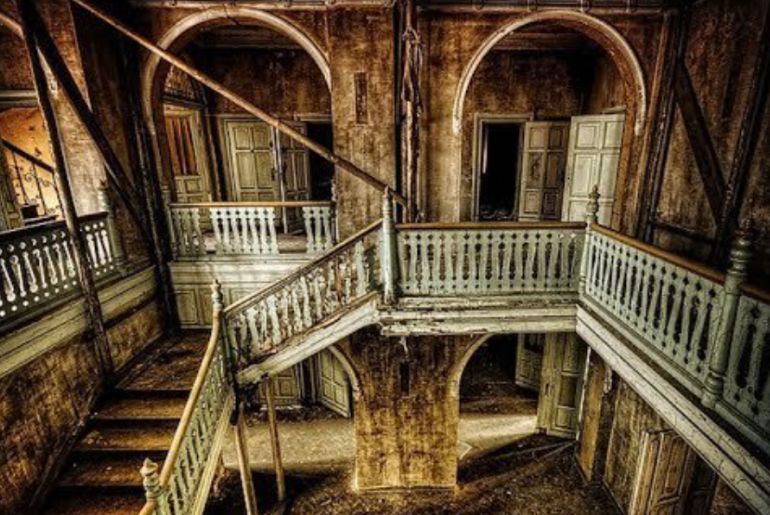
Begunkodar Railway Station: West Bengal’s Most Haunted and Forgotten Ghost Station

Nestled in the remote corners of Purulia, West Bengal, lies a railway station that’s not only abandoned but steeped in dark legends, eerie encounters, and ghostly whispers. Begunkodar Railway Station — known for its unnerving haunting and chilling backstory — has long captured the imagination of adventurers, paranormal enthusiasts, and locals alike.
But what makes this station so haunting? Why do even the bravest travelers shudder at the mention of its name? Here’s the spine-tingling story of Begunkodar, a place where the past refuses to stay buried.


1. An Abandoned Station with a Dark History

Begunkodar Railway Station was once a functional stop on the South Eastern Railway network but mysteriously shut down in the 1960s. Official records are scarce, and locals claim that it wasn’t just a decline in passenger traffic that led to the station's closure. The station’s mysterious abandonment has fueled rumors of supernatural forces that drove it into neglect — creating a chilling atmosphere that persists even today.


2. The Phantom Woman in White

The most prominent legend of Begunkodar revolves around a woman in white — a spectral figure who met her tragic end on the station’s tracks. This haunting figure, often seen by travelers and railway staff, is said to appear just before a train approaches, standing still on the tracks, only to disappear moments later.
Locals say that her ghostly presence is impossible to ignore. Eyewitness accounts report her materializing out of nowhere, her flowing white saree glowing faintly under the moonlight, only to vanish before any real danger strikes. The woman in white is the face of Begunkodar's hauntings, and sightings of her continue to send shivers down the spines of those who dare approach the station.


3. Ghostly Sounds and Mysterious Noises

The eerie atmosphere of Begunkodar isn’t confined to sightings alone. Those who visit the station at night report hearing phantom train whistles, clanging railway tracks, and footsteps that echo through the desolate platform. But what makes these sounds particularly unnerving is that no trains pass through the station.

The sounds of moving trains, though long gone from Begunkodar, seem to linger. Locals, as well as visitors, have described hearing noises that appear to be trapped in time — a persistent reminder of the station’s dark history and the spirits that continue to haunt it.


4. Mysterious Deaths and Unexplained Events

Why did Begunkodar close down for so long? The unexplained deaths and strange occurrences that surround the station may offer part of the answer. Locals speak of railway workers who vanished under mysterious circumstances, and many claim to have experienced disturbing physical sensations when near the station.

Some have described feelings of dizziness, choking sensations, or the sense of being watched by an unseen presence. The station's tragic history — filled with accidents and fatalities — seems to have left an indelible mark, adding to the mystery of the place.


5. The Station’s Reopening: The Haunting Continues

Despite being closed for 42 years, Begunkodar Railway Station was reopened in 2009. However, the reopening only revived the haunting, as train conductors and station staff continued to report ghostly phenomena. Many have spoken of hearing voices, seeing shadows moving at the edges of their vision, or feeling the unsettling coldness that fills the station after dark.
Even with its reopening, the station remains largely abandoned at night. Locals warn against lingering after sunset, claiming that the spirits of Begunkodar are particularly active when darkness falls.


6. The Woman in White: The Most Recognizable Ghost

Among all the eerie sightings reported at Begunkodar, the woman in white stands out as the most frequent and recognizable apparition. Descriptions of her are consistent — a beautiful woman dressed in a glowing white saree, seemingly lost in time, forever pacing the tracks of the abandoned station.

Her legend, steeped in tragedy and despair, is central to the station’s haunted reputation. As the story goes, the woman died in an accident at the station — her spirit left behind, forever bound to the place. Witnesses claim to see her on the tracks, sometimes standing still, sometimes walking slowly — but always disappearing before any train arrives, leaving behind only an unsettling silence.


7. The Sounds of the Haunted Station

The eerie sounds at Begunkodar are not limited to the ghostly woman. Phantom train whistles and the clanging of tracks have been reported frequently by those brave enough to visit the station after hours. These sounds are often accompanied by footsteps that seem to come from nowhere, causing the hairs on the back of one’s neck to stand up.

Many believe that these sounds are remnants of tragedies from the past — echoes of the lives lost and the spirits trapped at Begunkodar. The psychological effect these noises have on visitors can be overwhelming, creating an atmosphere of constant unease and fear.


8. The Mysterious Deaths and Haunting Reports

Reports of unnatural deaths linked to Begunkodar have been circulating for years. The station is said to be a place where the line between life and death blurs, with train conductors, railway workers, and even locals recounting terrifying encounters. Some claim to have felt the presence of spirits while walking the platform, while others report seeing shadowy figures lurking in the station’s corners.


9. Reopening the Station: The Haunting Lives On

In 2009, when the station was reopened, locals hoped that the supernatural activity might subside. But instead, the ghostly phenomena only seemed to increase, and the station remained a dark and forsaken place. Those who dared stay after sunset found themselves not alone, with voices, shadows, and an overwhelming sense of dread engulfing them.


10. Why Begunkodar is So Haunting

  • Unfinished Energy: The station feels like an unfinished chapter, with the past refusing to stay buried.
  • Isolation: Its remote location and abandoned state only add to the eerie charm, making it one of the most chilling places in West Bengal.
  • Supernatural Energy: Some paranormal experts believe that the energy of the station, tied to tragic events from its past, has created an atmosphere that attracts restless spirits, ensuring that the hauntings never truly end. 


Final Thoughts: Dare to Visit Begunkodar Railway Station?

Begunkodar Railway Station stands as one of West Bengal’s most haunted locations, a place where supernatural forces still seem to linger. Whether you’re a seasoned paranormal investigator or simply curious about ghostly encounters, Begunkodar offers a unique glimpse into a world where the line between the living and the dead is almost nonexistent.
So, if you dare to visit, prepare yourself. The woman in white, the sounds of phantom trains, and the cold presence of the past will remain with you long after you leave.

📍Location:
Begunkodar Railway Station is located in the Purulia district of West Bengal, India. Situated approximately 325 km northeast of Kolkata, it serves the nearby areas of Begunkodar and Jhalda town. The station is part of the Ranchi railway division under the South Eastern Railway zone of Indian Railways.


Whispers Behind the Dolls: The Dark Secrets of Kolkata’s Haunted Putul Bari......

Tucked away in the decaying shadows of North Kolkata, beyond the humming trams and the colonial nostalgia, stands a crumbling edifice that locals dare not speak of after dark. Known as Putul BariThe House of Dolls—this structure is not just a relic of Bengal’s past, but a breathing monument to whispered horrors, forgotten cries, and secrets buried in silence.

With its grotesque doll-like figurines perched along its iron balconies, this eerie mansion is a disturbing fusion of beauty and dread. It’s more than just an abandoned home—it's a place where time doesn’t flow, but waits… and watches.


Case Study 1: The Midnight Screams — Eyewitness Accounts by Locals

The most chilling testimonies surrounding Putul Bari come from those who live in its haunting periphery. Locals have long spoken of disembodied screams, anklet sounds, and soft, eerie laughter drifting down from the locked and decaying upper floors—especially around midnight.

“We never walk past it after midnight. You can hear someone crying—sometimes laughing. Not human.” — A local tea seller on Rabindra Sarani

Some believe these sounds are residual energies—echoes of trauma—that replay themselves eternally. Others attribute them to churel spirits (female ghosts in Bengali lore), bound to the place by injustice. The phenomenon of auditory hauntings in folklore often reflects unresolved pasts—a ghost story with its voice intact.


Case Study 2: The Forbidden Floors — The Unused Upper Storys

Despite the lower floors still being partially inhabited, the top floors of Putul Bari remain abandoned, and eerily so. Residents refuse to enter. Historians, architects, and paranormal enthusiasts who have tried to access these areas have reported a sense of unease, breathlessness, and an overwhelming sensation of being watched.

In 2017, a group of urban explorers attempted a documentary. They filmed their entry, described hearing “dragging sounds,” and abruptly ended the series days later, citing nightmares and “a strong sense of personal danger.”

The upper levels, with their darkened colonial corridors and collapsing ceilings, seem to resist observation—as though the house itself wants to hide its pain.


Case Study 3: The Ghosts of Exploitation — Colonial Power and Violence

What makes Putul Bari especially terrifying isn’t just the paranormal, but the very real and horrific past it may still carry. The building was once allegedly owned by wealthy landlords (zamindars) during British colonial rule. According to folklore, it was a place of exploitation and abuse, especially toward women who worked or were trafficked there. Many were said to have died or disappeared within its walls.

The haunting here isn’t only spiritual—it is historical. Putul Bari becomes a specter of gendered trauma, a shadow of violence that never received justice. In haunting studies and postcolonial theory, such places are referred to as “haunted spaces of memory”, where trauma outlives time.


Case Study 4: The Dolls Themselves — Symbolism of Horror

One of the most unsettling aspects of Putul Bari is what gives it its name: the dolls. The structure features strange, contorted, doll-like figures carved into the facade. Though once ornamental, they now appear grotesque—decayed, cracked, with eyes that seem to follow.

Psychologically, dolls exist in the uncanny valley—too lifelike to be toys, too artificial to be human. They are symbols of innocence perverted, of stillness hiding potential menace. In horror literature and cinema, dolls represent hidden evil—just like Putul Bari itself.

These carvings mock the colonial grandeur the house once boasted, and now, they seem to guard its secrets.


Case Study 5: Paranormal Investigators Speak — The Unspoken Warning

While many paranormal teams actively seek out haunted spaces across India, most avoid Putul Bari. One team that attempted to survey the house with EMF detectors and temperature gauges reported sharp electromagnetic spikes, failed cameras, and an overwhelming feeling of dread that forced them to leave in under an hour.

“It’s not a place that welcomes the living,” a paranormal expert later stated in an interview.

The very atmosphere of the house, according to them, felt like a repellent force—one that does not want its story told, or its silence broken.


Symbolism, Storytelling & the Cultural Significance of Putul Bari

Putul Bari is not just Kolkata’s most haunted house—it’s a gothic symbol of India’s colonial, social, and psychological wounds. Its legacy is not defined merely by spirits or spooky sounds, but by the weight of what happened there—and what still echoes.

To write about Putul Bari is to trespass gently upon memory and myth, where history and horror overlap. Its story is best whispered, not shouted.


Dare to Visit? A Word of Warning...

For thrill-seekers, Putul Bari may seem like an irresistible destination. But locals warn against entering—not out of superstition, but respect. The building is fragile, structurally unsound, and possibly still inhabited by remnants of a dark past.

📍 Location:
Putul Bari is located at 22, Rabindra Sarani, near Sovabazar Jetty, in North Kolkata (close to the Hooghly River). It lies near the crossing of Rabindra Sarani and Mahatma Gandhi Road, a short walk from the Sovabazar Metro Station.

If you do go, don’t go alone. And never try to climb to the upper floors. Some say once you see what’s up there… you don’t come back the same.


Final Thoughts: Haunted, but Not Forgotten

Haunted places often serve as metaphors for the histories we bury—Putul Bari is no different. It's a place where fear is inherited, not invited; where every cracked wall holds a story too dark to be told during the day.

Perhaps the dolls aren’t watching us.
Perhaps... they're waiting.