Ayanna: The Haunted Doll That Wants to Be Loved… or Else


(There is no verified or officially released photograph of the haunted doll Ayanna, as she is not part of a widely documented case like Annabelle or Robert. Most of the stories surrounding Ayanna come from urban legends, anonymous online forums, Reddit threads, and haunted object marketplaces, where authenticity is often unverifiable.)


You may never sleep the same again after meeting her eyes.


 “Some dolls blink. Ayanna stares. And if you stare back… she might not forgive you.”

Hidden in the shadows of online haunted object marketplaces, a name quietly circulates among paranormal collectors, ghost hunters, and the unlucky few who've crossed paths with her: Ayanna. She's not as famous as Annabelle or Robert — and that may be what makes her even more terrifying. Ayanna doesn’t just haunt your home. She wants your attention… and your obedience.


 The Origin: Bought… or Bound?

Ayanna first gained notoriety when she appeared on a now-defunct haunted items listing site. The seller’s description was unusually short:

“Beautiful African-style porcelain doll. Eyes never close. Do not mock her. Comes with protective box. Previous owner experienced difficulty breathing.”

That's all.

But deep-divers and paranormal forums reveal the truth: Ayanna wasn’t made in a factory — she was hand-crafted as a vessel, likely during a ritual rooted in hoodoo or folk witchcraft. It is believed that a spirit — not a child’s, but something older — was invited into the doll and never left.


The Gaze That Follows

One of Ayanna’s most unnerving features is her glass eyes — deep, unmoving, but painfully aware. Owners have reported feeling “watched” even in complete darkness, with one claiming:

“I turned her to face the wall. When I came back in the morning… she was looking directly at me.”

A paranormal investigator who handled her with gloves said it felt like his chest was being compressed. He had a panic attack within minutes. A camera left recording overnight caught no movement — but loud, rhythmic knocking sounds near the case.


The Choking Incident

The most disturbing case is from a woman in Ohio who bought Ayanna as a "gothic Halloween prop." Just two weeks later, she woke up gasping for air — hands around her throat. She lived alone.

She described the dream she had that night:

“A little girl with cracked skin stood over me. She said, ‘You left me in the cold. Now I’ll make you cold.’”

She tried to burn the doll. It didn’t work. The flames singed the box but never touched Ayanna. She eventually contacted a local priest who refused to bless it — instead recommending she bury it in consecrated ground, inside salt and iron chains.


Why Ayanna Haunts So Deeply

Unlike other haunted dolls that simply move or blink, Ayanna engages with deep psychological dread:

  • Nightmares shared between people in the same home.

  • Cold spots that follow you from room to room.

  • Sudden sadness, chest tightness, or unexplained bruising.

  • And in rare cases… possession-like trances, with victims mumbling in an unknown language.

Ayanna doesn’t want to be loved in the innocent way dolls do. She wants devotion. Surrender. A soul to feed on.


Is She Still Out There?

According to the latest rumor, she was sold again through a private online paranormal dealer. The buyer remains anonymous, but a Reddit user under the name @c0ldHands89 posted a blurry photo of Ayanna inside a suitcase — captioned only with:

“She cries at 3:03 a.m. I’m scared to let her out.”

The account was deleted three days later.


Warning: Don’t Mock Her

Just writing about Ayanna has led some bloggers and YouTubers to experience technical failures, deleted drafts, and disturbing dreams. Several claim their laptops glitched, crashed, or even started speaking aloud while editing content about her.

So if you’re reading this… and you feel cold… or something’s behind you…

Don’t look too quickly.
And never, ever say her name more than once at night.
She might be listening.


 Final Thought:

“Not all haunted dolls are cursed. Some are just waiting… for you to believe in them.”

The Silent Scream of Nohkalikai: A Journey into Meghalaya's Haunted Heart

They say the falls are beautiful. But beauty often hides the darkest secrets.

And some places echo louder than others. And some screams never fade.


Welcome to Meghalaya: Where the Mist Carries Memories

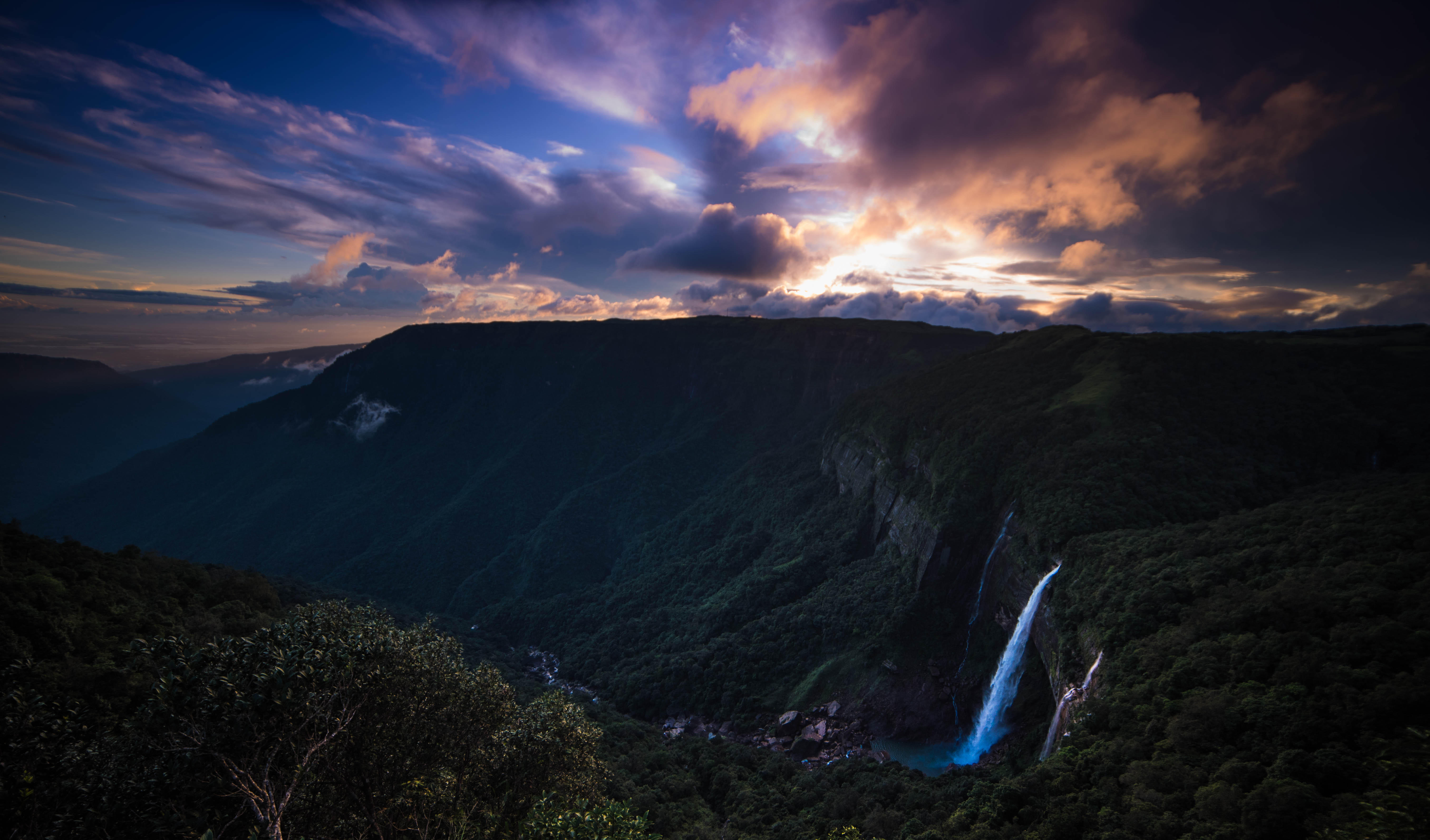
Cherrapunji, the rain-washed jewel of Meghalaya, greeted me like a dream—green hills, ancient caves, and clouds so low you could almost touch them. But what I didn’t expect was how heavy the silence felt near certain places. One in particular stood out before I even saw it:
Nohkalikai Falls.
Locals don’t say its name casually. Some won’t say it at all after sunset.

When I asked a woman selling betel nuts about it, she turned pale and muttered,

“You can visit… but don’t look down too long. That’s when she sees you back.”


The Legend of Ka Likai: A Tale of Tragedy

As I approached the falls, a local elder shared the harrowing tale. In the village of Rangjyrteh, there lived a woman named Ka Likai. After her husband's death, she remarried to provide for her infant daughter. However, her new husband grew jealous of the attention she gave her child. In a fit of rage, he killed the baby, cooked her flesh, and served it to Ka Likai. Unknowingly, she consumed the meal. Upon discovering her child's fingers in her betel-nut basket, she was overcome with grief and madness. She ran to the edge of the cliff and leaped to her death. The waterfall was named Nohkalikai, meaning "the leap of Ka Likai" in the Khasi language .


An Eerie Encounter: The Weight of Sorrow

Determined to witness the falls, I ventured closer. The roar of the water was deafening, yet there was an uncanny silence that enveloped the surroundings. As I stood there, a sudden chill ran down my spine. The air grew dense, and I felt an overwhelming sense of sorrow. It was as if the very atmosphere mourned the tragic tale.

I noticed a woman in traditional attire standing near the edge, gazing into the abyss. Her presence was both calming and unsettling. I approached, but as I neared, she vanished into the mist. Was it my imagination, or had I encountered the restless spirit of Ka Likai?


Reflections: The Haunting Beauty of Nohkalikai

The experience left me shaken. The falls, while undeniably beautiful, carried an aura of melancholy. The legend of Ka Likai wasn't just a story—it was a palpable presence that lingered in the air, in the mist, and in the hearts of those who knew it.

Visiting Nohkalikai Falls was more than a sightseeing trip; it was a journey into a tale of love, jealousy, and tragedy. A reminder that places, like people, carry their histories, their sorrows, and their ghosts. 


Warning to Travelers

Nohkalikai Falls is stunning. But beware: beauty doesn’t mean safety. If you go, don’t stand too close. Don’t mock the legend. And if you hear the sobbing…

Don’t answer it.
Don’t follow the sound.
And whatever you do—don’t look directly into the mist.

Because once she sees you…
She doesn’t forget.

The Whispering Well of Delhi: Unearthing the Secrets of Agrasen ki Baoli


Where water once rose... and spirits still linger.


Introduction: Beneath the Noise, Something Waits

In the heart of Delhi, surrounded by the modern hustle of Connaught Place and the ceaseless rhythm of urban life, lies a forgotten relic of ancient India. Most passersby don’t notice it. Some stop to stare. Fewer dare to descend.
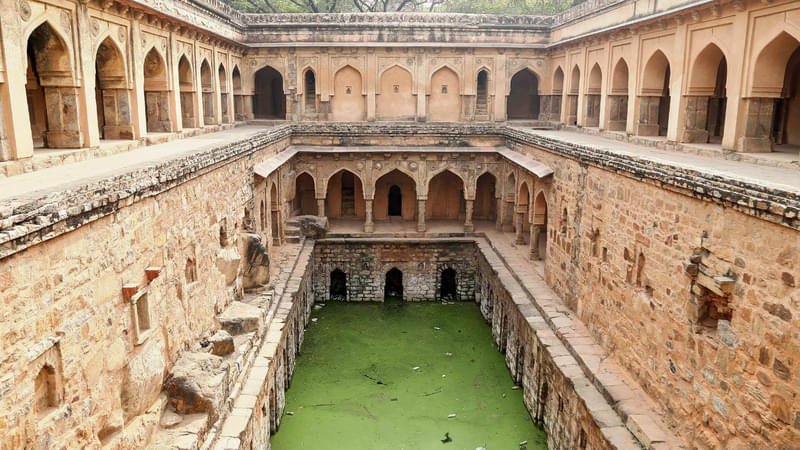
This is Agrasen ki Baoli, an ancient stepwell that runs deeper than just stone and silence. As you step into its shadowy depth, a chilling truth emerges: this place remembers. The deeper you go, the louder the whispers become—echoes of forgotten rituals, spectral tragedies, and perhaps… curses that never left.


A Descent into Mystery: What is Agrasen ki Baoli?

Agrasen ki Baoli (also spelled Ugrasen ki Baoli) is an architectural marvel—a stepwell with 108 stone steps descending into the earth. A baoli, or stepwell, was traditionally used in India for water conservation and social gatherings.

  • Dimensions: Approximately 60 meters long and 15 meters wide.

  • Levels: Three visible levels of arched niches line the walls, each darker than the last.

  • Location: Hailey Road, near Connaught Place, New Delhi, India.

  • Estimated Age: Believed to have been rebuilt during the 14th century by the Agrawal community, though its origins may date back to the time of King Agrasen, a legendary ruler from the Mahabharata era.

The well is now dry… but something still stirs within.


An Architectural Wonder—or an Occult Channel?

At first glance, Agrasen ki Baoli impresses as a blend of Indo-Islamic architecture—symmetrical arches, sharp geometry, and a sense of timeless elegance. But as you descend, the light begins to vanish. Each step deeper brings a noticeable drop in temperature. The air becomes heavy. The silence begins to feel... unnatural.


Locals say the baoli was once filled with black water—a cursed pool said to hypnotize those who looked into it too long, drawing them to madness and death. Some call it a place of sacrifice, others a portal. Historians dismiss such tales.
But ask the guards. Ask the few who visit alone.
They’ll tell you: don’t linger after dark.


Whispers, Warnings, and the Paranormal

Over the years, countless reports have added to the baoli’s eerie reputation:
Unseen footsteps echo behind visitors.
Cold drafts descend unnaturally, even on summer days.
Some claim to hear whispers in Sanskrit, or chanting that fades the moment you try to focus on it.
A few have reported dizziness or disorientation the deeper they go, as though something doesn’t want them to leave.
One photographer wrote:
“My camera battery died instantly at the bottom level. When I climbed back up, it turned on again—fully charged.”
Others speak of a shadow figure, often glimpsed briefly out of the corner of the eye. Never directly. Always watching.


Legends and Dark Lore

The most sinister tale tied to Agrasen ki Baoli revolves around its black water—believed to have been enchanted or cursed. According to legend, during a time of drought, people were drawn to the baoli not just for water—but for death. The water, they said, called to them… whispered promises of peace, seduced them into jumping to their doom.
Some even believe it was once used for occult rituals—sacrifices to unknown deities, long before the Mughal period.
One haunting urban myth suggests that the spirit of a priest, who cursed the well before leaping into it, still guards the site… punishing those who mock or defile it.


📍Location and Access

Address: Hailey Road, Near Connaught Place, New Delhi – 110001, India
Nearest Metro: Barakhamba Road Station (Blue Line), ~5-minute walk
Entry Fee: Free
Timings: Open daily from 7:00 AM to 6:00 PM
Best Time to Visit: Early morning for solitude, dusk for atmosphere (but beware of the strange energy after sunset)

Though it's a protected monument under the Archaeological Survey of India (ASI), it still feels oddly forgotten… like a relic the city prefers to ignore.


Chilling Visitor Accounts

Ankita S. (Traveler & Blogger):
“As I descended, my phone started playing music… by itself. I was alone. The song? A chant in a language I didn’t know.”
Rakesh Verma (Night Guard, 2016):
“People think I’m joking when I say the voices come at night. But I hear them. Arguing, chanting. Sometimes laughing. I never go near the steps after sunset.”
Reddit User u/delhighosthunter:
“I did a night shoot here. Worst decision of my life. I felt watched the whole time. When I reviewed my audio later… there was a faint voice saying ‘Go back.’ I didn’t hear it at the time.”


Science or Superstition?

Skeptics believe the chilling effects of Agrasen ki Baoli can be explained by:
Acoustic illusions due to the stepwell’s echoing structure.
Temperature shifts from descending underground.
Psychological suggestion—many visitors expect it to be haunted, so their minds invent experiences.
But believers argue the sensations are too intense, too consistent, and too ancient to be coincidence.


Tips for Visiting (and Surviving the Chill)

Avoid headphones. The echoes and environmental sounds are part of the experience—and safety.
Respect the space. Don’t vandalize or speak loudly. Treat it as sacred.
Don’t go alone, especially after 5 PM.
Bring a fully charged device, but be warned: many experience battery drain here.


Conclusion: Do You Dare Descend?

Agrasen ki Baoli isn’t just another historical monument. It’s a liminal space—a place between past and present, between fact and folklore. A hollow carved into the city’s skin, where history seeps like a forgotten wound.
So if you ever find yourself walking the streets of New Delhi and feel an invisible pull toward a narrow alley off Hailey Road… follow it. Stand at the mouth of the baoli. Feel the breath of centuries rising up from the dark.
But remember:
The deeper you go…
The less likely it is you’ll return unchanged.

Whispers of the Sea of Trees: Inside Japan’s Haunted Aokigahara Forest


Where silence screams and shadows remember.


Introduction: Where Shadows Settle Beneath the Trees

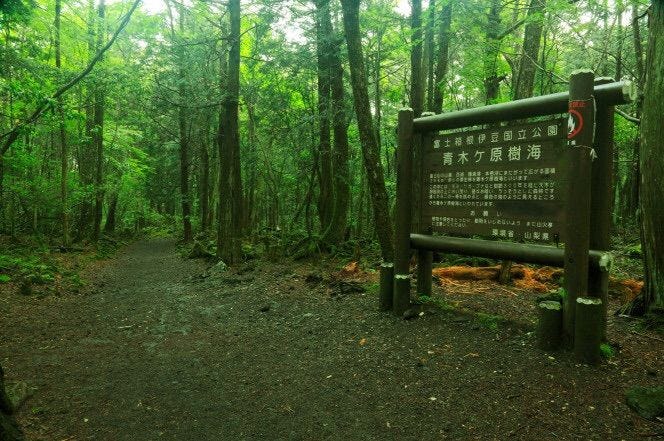
At the foot of Mount Fuji lies a forest so still, so oppressively silent, that it seems the Earth itself dares not breathe. This is Aokigahara, also ominously known as Jukai – the Sea of Trees. To many, it’s a lush woodland shrouded in volcanic rock and ancient folklore. But to others, it's Japan’s most haunted forest – a place where compasses go haywire, where people vanish without a trace, and where the trees are said to remember every lost soul who has wandered in… and never returned.


A Landscape Forged by Fire and Silence

Aokigahara was born from fire—specifically, the eruption of Mount Fuji in 864 CE. The lava flows created a rugged landscape beneath the forest floor, riddled with caves, crevices, and unstable terrain. Moss carpets the forest, roots tangle in all directions, and tree branches twist like grasping hands.

There is an unnatural quiet here. Sound is absorbed. Your own footsteps echo like intrusions in a place where time has stopped. It’s not just a forest—it’s a feeling.


The Suicide Forest: A Grim Reputation

Nicknamed Japan's Suicide Forest, Aokigahara has become tragically infamous for the number of people who go there to take their own lives. Some say it’s spiritual. Others, psychological. But whatever the reason, Aokigahara bears a heavy burden.

Although Japanese authorities no longer publish suicide statistics to avoid encouraging copycats, past reports have indicated over 100 attempts in a single year. Many who enter leave behind haunting signs: abandoned tents, shoes, scattered belongings—and sometimes final notes.

At the forest’s entrance, signs urge reflection:
“Your life is a precious gift from your parents. Think about your family. Don’t face this alone—talk to someone.”


The Paranormal Pulse: Spirits of the Lost

Local legend holds that the forest is haunted by yūrei—restless spirits of those who died with intense emotions: sorrow, fear, or rage. These ghosts are said to linger in limbo, consumed by unfinished business or overwhelming grief.

Visitors have reported:

  • Apparitions—figures peeking from behind trees or vanishing just as they're spotted.

  • Unnatural sounds—cries, footsteps, or whispers when no one else is around.

  • The sensation of being followed, though turning around reveals only trees.

Some say these aren’t hallucinations… they’re invitations.


The Forest Floor: A Map to Madness

Because of the dense vegetation and disorienting terrain, many visitors use ribbons or tape to mark their path—breadcrumbs in a place with no landmarks. These colored trails can lead to:

  • Personal shrines left for the dead.

  • Empty campsites where someone may have once hesitated.

  • Or worse: the remnants of someone who didn’t make it out.

You may stumble upon makeshift memorials—photographs, dolls, trinkets—tied to trees with eerie reverence.


Forbidden Trails and Cursed Caves

The forest conceals lava tubes and ice caves beneath its surface. Some, like the Fugaku Wind Cave and Narusawa Ice Cave, are accessible to tourists—but even these are said to carry an energy that weighs on the chest.

Local tales speak of phantom winds in the caves and shadows that move independently of light.

Even park rangers tread carefully—many say the forest has a mind of its own.


Map: Entry Points to Aokigahara

Aokigahara spans over 30 square kilometers. The most frequented entry points include:

  • The Main Trailhead near Narusawa Ice Cave – Includes warning signs and patrols.

  • Koufuji Parking Lot – A common entry for hikers, often monitored.

  • Lake Saiko Side Trails – Quieter, less patrolled, and eerier.

  • Forest Service Roads – Rarely used, often where abandoned vehicles are found.

Tourist maps are available, but most of the forest is unmarked, adding to its haunting infamy.


Survivor Quotes: “What I Saw in the Forest”

Mika Tanaka, a local volunteer:

“I once followed a trail of blue tape. It led to a small clearing where a man had set up camp. No one was there, but the fire pit was warm. It was like he vanished.”

Daisuke Hoshino, a photographer:

“I saw a woman in white standing by a tree. She didn’t move. I blinked, and she was gone. I wasn’t alone—my friend saw her too.”

Anonymous Reddit User:

“You don’t hear things in Aokigahara. You feel them. I left after 20 minutes. The silence was unbearable… like it was waiting to swallow sound.”


🇯🇵 Cultural Note: The Role of Mental Health in Japan

Mental health in Japan has long been a complex issue, deeply rooted in societal expectations and stigma. Concepts like gaman (enduring hardship without complaint) and shame culture often prevent individuals from seeking help.

While change is slowly occurring—especially with youth-led awareness campaigns—mental illness is still under-addressed. Aokigahara tragically became a symbol of this silent struggle.

Today, government efforts include:

  • Increased signage with crisis hotlines.

  • Patrols and camera systems in key areas.

  • Collaborations with mental health advocates.

But the forest still calls to those in despair.


How to Visit Respectfully: Rules, Warnings, and Ethics

If you're planning to visit Aokigahara, respect is paramount.

What to Do:

  • Stay on marked paths. It’s easy to get lost—even professionals use GPS.

  • Do not disturb belongings. They may be part of memorials or investigations.

  • Follow local signs and guidelines.

  • Be quiet. Avoid laughter, loud voices, or disrespectful behavior.

  • Educate yourself beforehand—understand what the place means to locals.

What Not to Do:

  • Don’t treat it like a horror attraction.

  • Never live-stream or film disrespectfully (a major scandal in 2018 brought global outrage).

  • Do not take “souvenirs” from the forest.

This is not an amusement park. It’s a place of mourning, mystery… and perhaps something more.

📍 Location

  • Name: Aokigahara Forest (青木ヶ原樹海, Aokigahara Jukai — "Sea of Trees")

  • Location: Northwestern base of Mount Fuji, Yamanashi Prefecture, Japan

  • Nearest Town: Fujikawaguchiko, located in the Minamitsuru District

  • Distance from Tokyo: Approx. 2.5 to 3 hours by train or car (around 100–120 km / 62–75 miles)


Closing Thoughts: Enter, If You Dare

Aokigahara is not simply haunted by ghosts—it is haunted by stories, by silence, by sorrow too deep for words. It reflects the shadow within all of us—the places we hide, the pain we suppress.

If you stand at the edge of the Sea of Trees and feel a chill travel up your spine, don’t ignore it.

Something is watching.

Something remembers.


Whispers Among the Dolls: Mexico’s Island of the Dead Eyes


Not all toys are left behind. Some watch… forever.


A Place Where Dolls Never Sleep

Deep in the ancient canal system of Xochimilco, south of Mexico City, there is an island unlike any other in the world. Overgrown, decaying, and utterly silent—except for the wind through the mangroves—this place is known as La Isla de las Muñecas:


The Island of the Dolls.             


Strung from trees, nailed to rotting posts, and hanging by wires, hundreds of mutilated dolls stare down at visitors. Their eyes are faded. Some are eyeless. Others have insect nests inside their hollow skulls. Their limbs are torn, their faces weather-beaten and cracked—as if they’ve been screaming for decades.

This is no art installation. It is a shrine.
A floating nightmare birthed in death—and kept alive by something far worse.


The Girl Beneath the Water

Legend says it began in the 1950s with a man named Don Julián Santana Barrera, a quiet hermit who abandoned his family to live alone on a small island. One day, according to his own account, he discovered the body of a young girl floating face-down in the canal.

She had drowned mysteriously. No one came to claim her.

Shortly after, Julián began hearing whispers at night. The cries of a child. The sound of someone moving through the reeds. Then, he found a doll—just one plastic limb bobbing in the water, as if torn from a child’s arms.

He hung the doll in a tree to honor the girl’s spirit.

But the whispers didn’t stop.

So he hung another.
And another.
And another.

Over the next fifty years, Don Julián transformed the island into a graveyard of dolls—hundreds of them, all in various states of decay. He believed the girl's spirit had possessed the dolls and that she demanded more. Each new doll was a sacrifice. A desperate attempt to appease the dead.


A Death That Echoed the Legend

In 2001, the story came full circle.

Don Julián was found floating face-down in the same canal where he claimed the girl had drowned fifty years before. Locals say it was fate. Others believe it was the girl claiming him at last.

And some whisper that it wasn’t just one spirit on that island.

Because when night falls… the dolls move.


What Awaits Visitors Today

Tourists can visit the island today, though many report strange phenomena after stepping off the boat:

  • The dolls’ heads turn as you walk past.

  • Their eyes blink, even when there's no breeze.

  • Audio recorders pick up unexplained giggles, sobbing, or faint words in Spanish.

  • Visitors feel sudden cold spots, as if someone invisible brushed past them.

  • Some even claim to have seen a girl standing among the dolls, only to vanish.

The island smells of rot and damp cloth. The air is heavy. Even the boatmen—hardened locals who’ve ferried travelers for years—refuse to stay after sunset.

“They say the dolls protect the island now,” one local whispered.
“But who protects you… from them?”


Captured in Media — But Never Explained

The Island of the Dolls has been featured in:

  • Ghost Adventures (Travel Channel), where the team recorded unexplained EVPs and doll movement.

  • BuzzFeed Unsolved, where the hosts reported a sense of being watched at all times.

  • Countless paranormal documentaries and horror articles.

Yet no one has explained why the dolls feel so wrong—or why many report cursed dreams and paranormal encounters weeks after visiting.


A Shrine of Fear and Forgotten Souls

Don Julián’s house still stands on the island, now a museum of horror, filled with more dolls, child-sized coffins, and handwritten notes. Locals occasionally leave offerings—candies, toys, even cigarettes—for the spirits, hoping to gain safe passage.

And if you stand quietly at the heart of the island, you may hear it:

The creek of rope.
A whisper behind you.
A doll giggling in the dark.


Should You Go?

Many come for curiosity. Fewer return unchanged.

The dolls are not decoration.
They are witnesses.
And perhaps… something more.

Because the Island of the Dolls isn’t just haunted by a ghost.
It’s haunted by every doll that has seen, heard, or remembered the grief of a forgotten child—and the madness of the man who tried to save her soul.


Final Warning: They’re Still Watching

Don’t look too long into their cracked eyes.
Don’t speak her name out loud.
And when you leave, make sure you count the dolls…

Because if there’s one more than before—

—you never really left. 


Six Demons, One Girl: The True Story Behind the Exorcism of Anneliese Michel


What happens when medicine fails… and something ancient wakes inside?


Warning: This story contains disturbing, real-life events involving death, mental illness, and religious rituals. Reader discretion is advised.


The Girl Who Died Screaming

In the quiet village of Klingenberg, Bavaria, in 1976, a 23-year-old girl named Anneliese Michel died after enduring 67 Catholic exorcisms. She weighed just 68 pounds. Her body was broken, bruised, and starved. But her family, and even the priests involved, claimed she wasn’t sick.

They believed she was possessed.

What unfolded over the previous ten months was a descent into pure, medieval horror—one that blurred the line between psychiatry and something far darker.


Who Was Anneliese Michel?

Anneliese was a devout Roman Catholic, a kind and deeply religious young woman. Born in 1952 to a strict family, she began experiencing blackouts and unexplained seizures in her late teens. In 1969, she was diagnosed with temporal lobe epilepsy, a condition linked to hallucinations and altered states of consciousness.

She began hearing voices—not benign whispers, but growls that told her she was damned, that she would rot in hell. Her symptoms worsened even with medication. Her behavior turned erratic. She tore off her clothes, ate spiders, licked her own urine off the floor, and screamed for hours. Her family turned to the Church.

What they got was far more than they bargained for.


"She Is Not Sick. She Is Possessed."

After years of failed medical treatment, two Catholic priests, Father Ernst Alt and Father Arnold Renz, were convinced Anneliese was in the grip of a diabolic force. In 1975, Bishop Josef Stangl granted permission for the Rite of Exorcism—an ancient ritual almost never used in the modern era.

The exorcisms began in secret.

What followed was 10 months of agony, all recorded on audio tapes that still exist—and will freeze your blood. In them, Anneliese’s voice shifts into grotesque growls, sometimes overlapping—multiple voices speaking at once. She claimed to be possessed by six entities:

  • Lucifer

  • Cain

  • Judas Iscariot

  • Nero

  • Adolf Hitler

  • A disgraced priest named Fleischmann

They mocked the priests. They blasphemed. And they screamed through her.

"I am Lucifer, the devil in the flesh."
"She will rot with us forever."
"You priests are nothing!"


Self-Harm, Starvation, and a Descent into Death 

As the sessions continued—sometimes lasting four hours each, multiple times a week—Anneliese’s body deteriorated. She refused to eat, believing that fasting would weaken the demons. Her knees were shattered from hundreds of daily genuflections—dropping to her knees in prayer until she could no longer stand.

She suffered from fever, wounds, pneumonia, and hallucinations of demonic faces. Her family watched her waste away, convinced they were witnessing spiritual warfare, not mental illness.

On July 1, 1976, Anneliese Michel died. Her official cause of death was malnutrition and dehydration. She had been weighed only 30 kilograms (68 pounds) at the time of death.

Her final words to her mother were:

"Mother, I'm afraid..."


The Trial That Shook Germany 

The German government charged her parents and the two priests with negligent homicide. The trial began in 1978 and became a media circus—a clash between science and religion, faith and forensics.

Prosecutors argued that Anneliese needed psychiatric care, not rituals. The defense claimed she was the victim of a genuine demonic possession, and the Church failed her by not stepping in earlier.

Ultimately, all four were found guilty, but received suspended sentences and fines. The trial reignited debates over exorcism, mental health, and the consequences of religious extremism.


The Legacy and the Horror That Lingers

The case inspired books, documentaries, and films—including The Exorcism of Emily Rose, a dramatized but deeply unsettling retelling of Anneliese’s life and death. Today, many still argue whether she was sick—or truly possessed.

Her grave in Klingenberg has become a pilgrimage site, with visitors reporting strange occurrences—faint whispers, cold air, even sightings of a young girl kneeling in prayer near the headstone.

And the tapes? They're real. You can hear them. And once you do, you may never sleep the same again.


Possession or Psychosis? Or Both?

Anneliese Michel’s exorcism remains one of the most terrifying real-life cases of possession ever recorded. Whether you believe she was overtaken by ancient evil or abandoned by the very systems meant to protect her, one thing is clear:

Something monstrous happened in that house. And it wore the face of a girl.


A Voice That Still Echoes in the Dark

Even decades later, those who have listened to Anneliese’s exorcism tapes say there is something inhuman about them—something that doesn’t belong in this world.

The voice that once came from that fragile girl’s throat was not hers.

It was something else.

And if you dare to listen, be warned:
What you hear cannot be unheard.

In the silence of the night, when the lights are off and your room goes still, you may find yourself remembering her voice…

Screaming.

Growling.

Laughing.

And you might just wonder—

What if she wasn’t alone in that room?

What if it’s still out there… waiting for someone new? 

Remember… not all demons hide in the dark. Some wear a smile.


Dow Hill, Kurseong: Where Shadows Whisper and Spirits Lurk


“Some hills echo laughter. Others echo silence. But in Dow Hill, the silence speaks… and it remembers.”

Hidden in the folds of Darjeeling’s lesser-known sibling, Kurseong, lies Dow Hill—a place wrapped in perpetual mist, where ancient pine trees whisper secrets only the dead should know. It’s beautiful, yes. But not the kind of beauty that comforts. It's the kind that stares back at you from the woods, hollow-eyed and waiting.

This isn't just a destination. It’s a passage… into the supernatural.


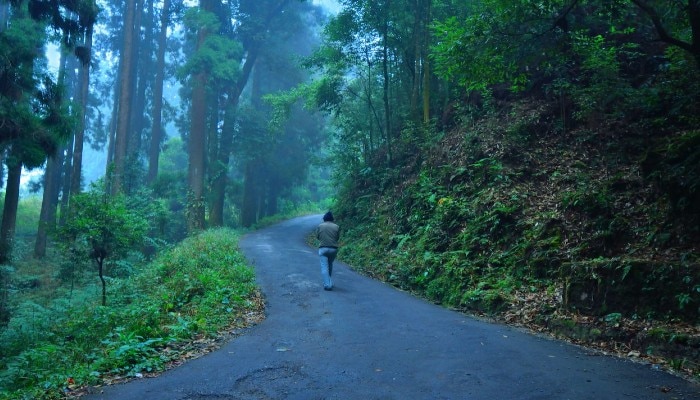
The Forest That Watches

The Dow Hill forest isn’t silent. It breathes.

Locals swear the trees murmur at night, as if exchanging long-forgotten secrets. Travelers have reported hearing footsteps behind them—soft, deliberate, pacing with theirs—only to find themselves alone. Alone… but not unwatched.

Some say the forest calls to certain people. People who never come back the same.


The Death Road: A Walk With the Dead

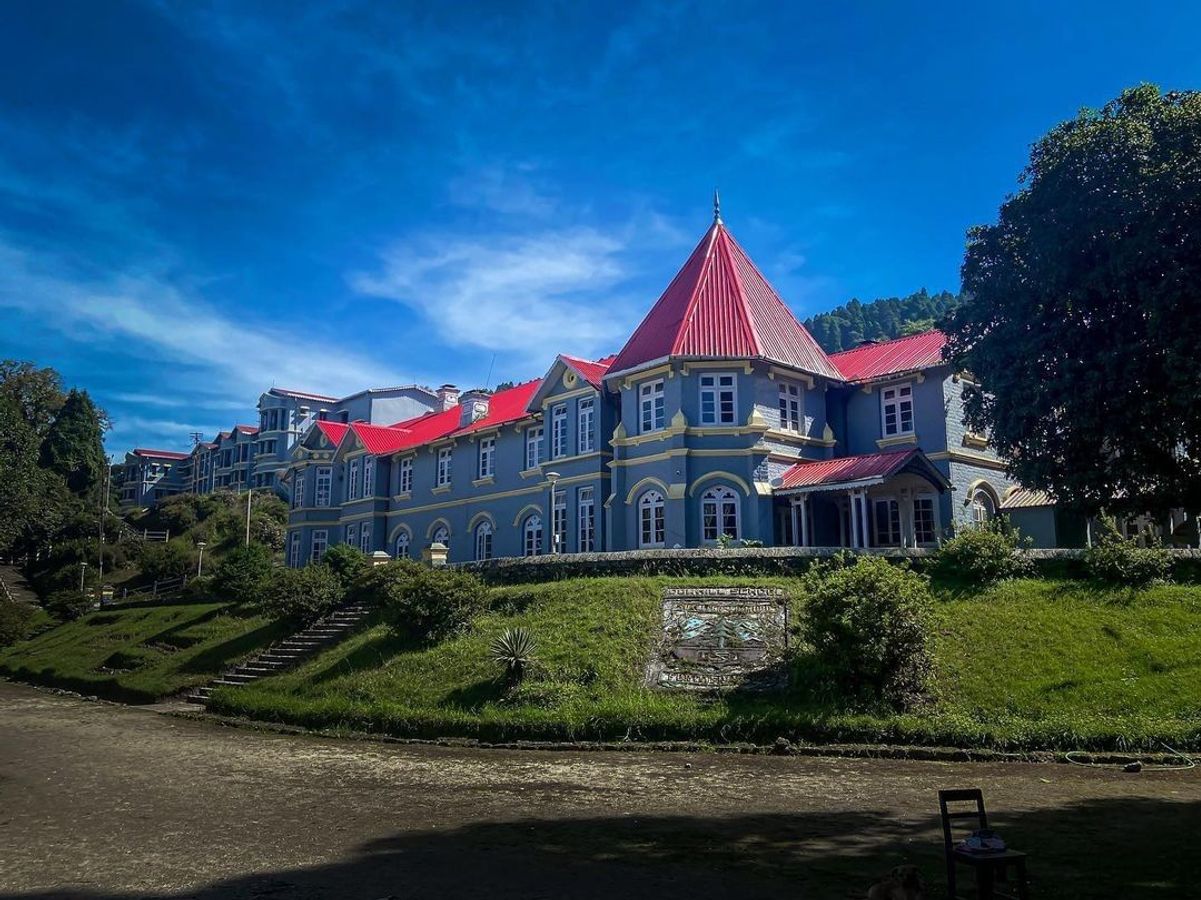
Between the Victoria Boys' School and the forest office lies a narrow path known as “Death Road.” The name is no metaphor. It’s a warning.

Woodcutters, hikers, and even police have reported seeing a headless boy, walking aimlessly down the road before vanishing into the fog. No footsteps. No noise. Just the swish of invisible movement, the trailing scent of something old and earthy—like damp soil and decaying wood.

People say if you look too long, he stops. And turns to face you.


Victoria Boys' School: A Lesson in Fear

During school term, laughter and voices fill the halls. But when winter falls and the students leave, Victoria Boys' School changes. Teachers refuse to speak openly, but some have confessed to hearing footsteps echoing in locked hallways, faint whispers from empty rooms, and shadowy figures standing at the end of corridors... that vanish when approached.

One caretaker locked the main door one night, only to hear classroom chairs scraping violently against the floor from inside. When he opened the door—there was nothing.

Except one chair. Turned toward the corner. As though someone—or something—had been watching him.


The Woman in Grey

You may see her if you wander too far into the forest: a woman in grey, always at a distance. She doesn’t walk. She floats.

She appears where the mist is thickest, where the trees block out the sun. No face, only form. She’s been seen standing motionless for hours… until she disappears between the trees. Some say she follows those who disrespect the land. Others believe she’s protecting something.

But no one knows who she is.

Or what she’s waiting for.


Madness in the Mist

Dow Hill isn’t just haunted—it haunts you.

People who’ve spent too long in the forest speak of a crushing weight in their chest, paranoia, nightmares they can't wake from. Some leave the hills and never recover. A few have been institutionalized, whispering about "voices in the branches" or "eyes that don’t blink."

Locals don’t go in after dark. And if they do, they never go alone.


Dare to Visit?

If you’re a thrill-seeker, Dow Hill might tempt you. But this is not a staged ghost tour. There are no jump scares. No actors.

There’s only silence.
Fog.
Cold air that feels too thick to breathe.
And a lingering sense that something… someone… is watching.

📍 Location:
Dow Hill, Kurseong, West Bengal, India

Located about 30 km from Darjeeling and roughly 50 km from Siliguri, Dow Hill is easily accessible by road and the nearby Kurseong railway station. But don’t let the scenic drive fool you—what awaits beyond the mist is not meant for everyone.

Whether you believe in spirits or not, one thing is certain: Dow Hill changes people.

You may leave with stories.
You may leave with scars.
But you will not leave untouched.


Final Words

Dow Hill isn’t for the faint-hearted. It’s for those who believe the world is more than flesh and bone. For those who know that some places are remembered not for the people who lived in them, but for the things they left behind.

If you go, don’t just bring a flashlight.
Bring your courage.
And whatever you do—don’t look back.